Workshop: Talia White
- elle walker

- Jan 24, 2019
- 3 min read
Updated: Mar 26, 2019
Today was a very interesting day: a fashion shoot with photographer Talia White and model Lexi Kelly. As someone who is more used to shooting in the streets, this was shaping up to be something of a challenge.
Talia gave an interesting presentation about her career journey and workflow. She made some comments that stuck with me: a) she wasn't a very technical photographer and b) she tends to stick with the same lighting for each of her shoots. She referenced that even Annie Leibovitz herself claimed not to very technical. Both of these comments gave me a little more confidence that I could actually pull this off, as I'm not a technical person either.
After the presentation, I nervously trotted off to the studio, borrowed Canon in hand, to undertake my first ever fashion shoot. With a professional model. And a professional photographer looking on. No pressure, then.
Luckily for me, Lexi was a delight to work with, very personable and very professional and need almost no direction.
The shoot was great fun, but I wish I could have enjoyed it more. My nerves never really left me as I had one thought present in my mind at all times: what if the photographs are awful? Abstracts, architecture, light trails, discarded beer bottles, you know, inanimate objects that don't move, are the things I'm used to shooting. Whilst I try not to constantly look at the back of the camera to review my shots in a street setting, in a studio, how do you have confidence that what you've shot is what your client wants when the model has left for the day? Street photography (and architecture and abstracts and the like), whilst not easy, have an element of "oh, my shot of xxx building wasn't great, I'll go back next week".
Another point: to my untrained eye, what constitutes a great fashion shot? What do other people see in fashion shoots that I don't? Like anything else, this is all practice and over the coming weeks, I'm hope nerves will be replaced by buckets of confidence.
Technical information
A risk assessment form was completed. A discussion had taken place regarding fire alarms and the evacuation procedures.

All equipment had been PAT tested within the statutory 12 months, so was fit for purpose.

Equipment
Canon EOS 7D
Canon 15 mm - 85 mm f/3.5 - f/5.6 lens
Large Octobox
Softbox
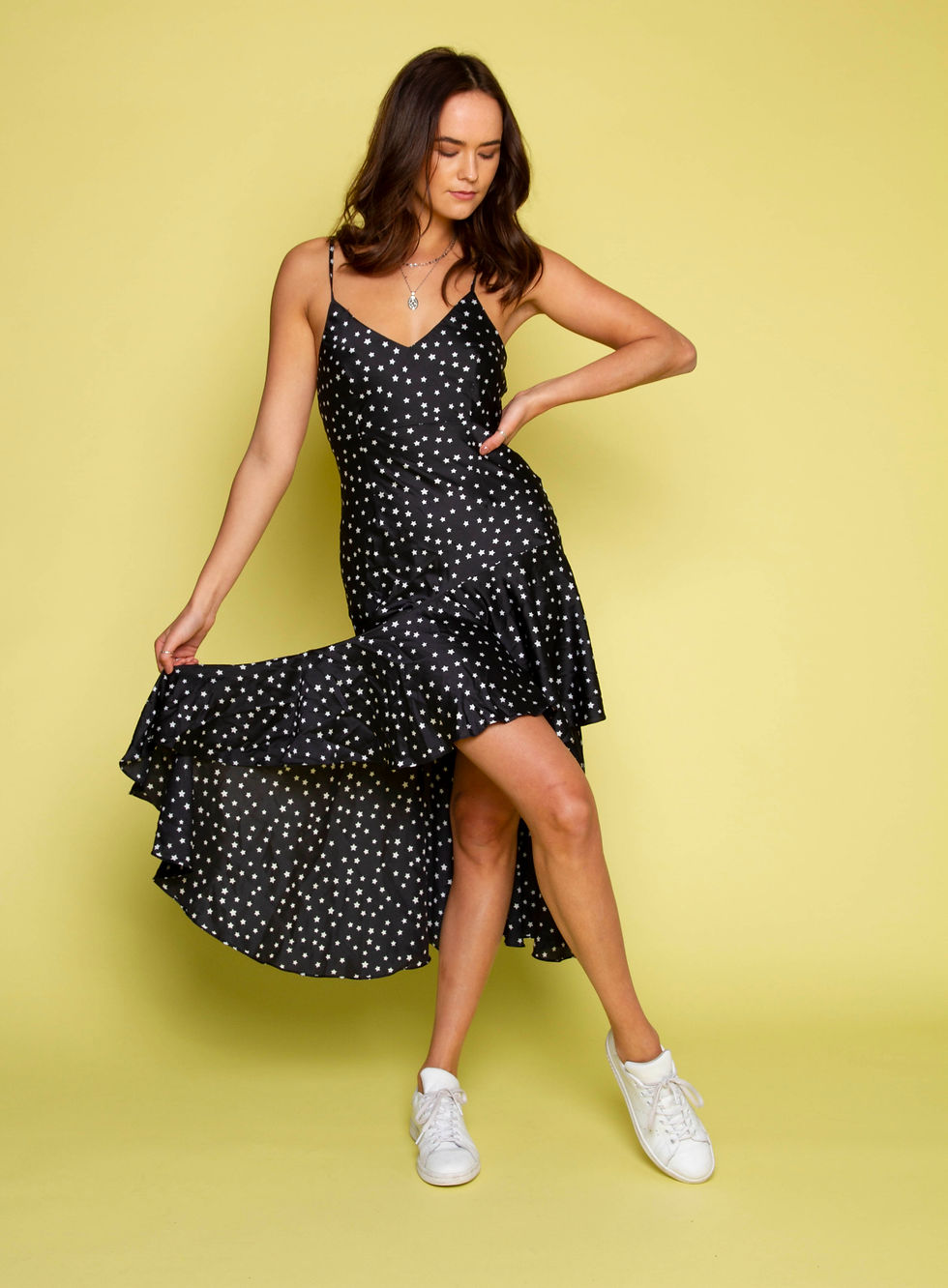
The studio had two different set ups: a lemon backdrop for full length portraits, an October and a soft box and a cappuccino coloured backdrop with an Octobox only. The purpose of the soft box was to provide added light for the model's legs and to ensure that the light was even for the full length shot. As the model was to be sitting on a chair, the additional light wasn't required.


Talia takes a simple but effective approach to her camera settings: ISO 100, f/10, 1/100 second, which she calls as "all the zeroes". This was a great idea, to have an easily remembered combination of settings that can be adjusted as required depending on what activity is happening during the shoot: the shutter speed can be increased if the model is moving, for example.
Contact sheets


These were the best images from the shoot, presented in the contact sheets.



In Lightroom and Photoshop the usual minor adjustments were made to colour, contrast etc, with additional skin re-touching undertaken in Photoshop, which is the industry standard for re-touching. Other options available are commercial or self-created skin re-touching 'actions'. Actions are a successful method for batch editing or re-touching several images quickly, without the laborious step-by-step process that post-production can entail.

Evaluation
The brief here was simply a fashion shoot, so the question is, was the brief met? The first outfit is a summer dress with an asymmetric hem. The model moved in such a way that promoted movement, this showing the dresses' qualities.
The soothing, pale colour of the backdrop and the model remaining seated created a mood of relaxed calm. The comforting appearance of the sweater are shown to great effect which would leave a potential purchaser to wonder about the tactile qualities, which could potentially lead to a purchase.
On my contact sheet, one comment referred to the fact that (re: the final image here) the tousled parts of the hair should be removed. So I did. Now, I've mentioned before that I'm no whizz with Photoshop, although I'm slowly tackling more complex tasks (but more on that much later), so at the time I attempted to remove the errant strands of hair it looked far worse than it does in its natural state, so I left it as is. When my skills have advanced, I'll have another attempt at editing it so I can see how far I've progressed.
Overall, I'm happy with the outcome of the shoot and happy with the photographs here, with the final one being my favourite.


Comments